Daylighting a Forgotten Waterfall
Email not displaying correctly? View it in your browser.

|
June 2, 2016 Identifying a Unique Downtown Asset Can Drive Development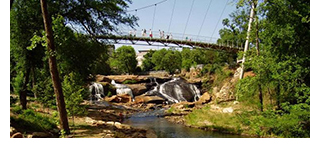
Uncovering and promoting a long-forgotten waterfall in the heart of downtown is paying a huge return on investment in Greenville, SC. Since Falls Park on the Reedy opened in 2004, development has sprung up all along the Reedy River in the historic West End area downtown. "We are big believers in accentuating the things that make a city unique and different," says Mayor Knox White in the June issue of Downtown Idea Exchange. Unfortunately, for almost 50 years, the downtown’s unique waterfall was hidden beneath a four-lane bridge. Today, a 32-acre park surrounds the waterfall. And it is in every respect the "centerpiece of our downtown," says Knox. Part of the attraction is the 355-foot Liberty Bridge. The pedestrian-only suspension bridge is supported only on one side to provide unobstructed views of the waterfall and to give the impression that the structure is floating in mid-air. Colorful lights along the sides set the bridge aglow at night. The entrance to the park is located on Main Street. "You walk down some steps into the beautiful garden, and the entrance to the pedestrian bridge," says Knox. The area at the other end of the pedestrian bridge features mostly office buildings now, with a hotel development expected soon. Overall, expenditures on the park have resulted in nearly an eight-fold investment in the surrounding area. Details on the lengthy development process and economic impact appear in the June issue of Downtown Idea Exchange. 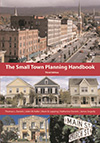
Recommended readingFor decades, The Small Town Planning Handbook has helped small towns and rural communities plan for change. This third edition presents a step-by-step guide to drafting and implementing a comprehensive plan that is sensitive to both local character and limited resources. Written in straightforward, non-technical language, it addresses the unique problems that smaller communities face and focuses on practical, time-tested methods for improvement. The Small Town Planning Handbook is intended for use in small cities, rural counties, and towns of under 10,000 people; however, the strategies and techniques presented in the handbook can be successfully transferred to communities of up to 25,000 people. |

|
Downtown Development Center
36 Midvale Road, Suite 2E Mountain Lakes, NJ 07046 Phone: (973) 265-2300 • www.DowntownDevelopment.com |
© 2016 Alexander Communications Group, Inc. All rights reserved.